Every year, new sections appear in the program of the Millennium Docs Against Gravity festival, addressing the most pressing issues of the contemporary world. They reflect the explorations and creative pursuits of documentary filmmakers over recent months. We have already learned about the first two new sections of MDAG in 2026 – In the Name of the Father and the Son and All Eyes on Palestine. Films in the first section focus on the transformations taking place in contemporary father–son relationships, while the second section examines the tragic situation of Palestinians.
The 23rd MDAG will take place from May 8 to 17, 2026, in cinemas across seven cities (Warsaw, Wrocław, Gdynia, Poznań, Katowice, Łódź, and Bydgoszcz), and from May 19 to June 1 online at mdag.pl!
What Do Father-Son Relationships Look Like Today?
For years, stereotypes surrounding masculinity have often filled father-son relationships with distance. Could it be otherwise? The directors featured in the section In the Name of the Father and the the Son attempt to answer this question and challenge the status quo by exploring intimacy and examining family relationships with sensitivity and courage.
[Two men in protective clothing walk through a shallow river on a cloudy day, holding metal detectors; the water ripples around their legs, and bare trees and a vast winter landscape can be seen in the background.]
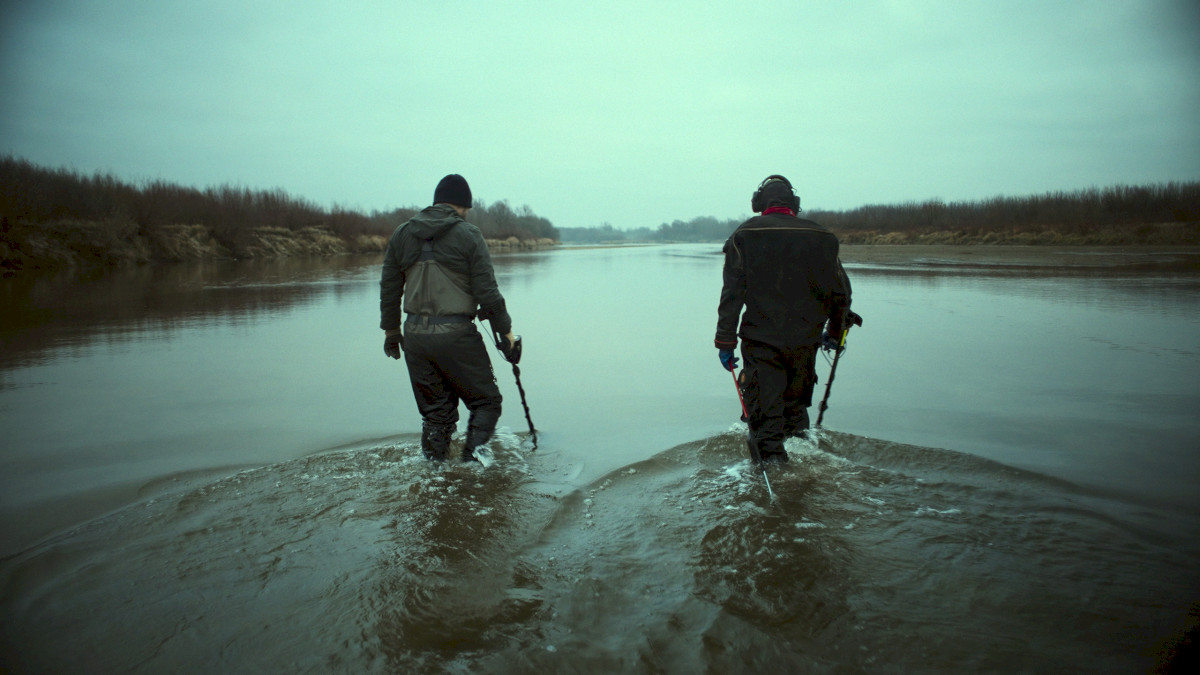
“Closure”, directed by Michał Marczak, tells the story of Daniel, who, after the disappearance of his teenage son, searches the depths of the Vistula River, torn between fear of a tragic jump and hope that his son is still alive.
[A man walks down a narrow, built-up street carrying a child on his shoulders; he is holding a football, and both are seen from behind against a backdrop of modest brick houses.]
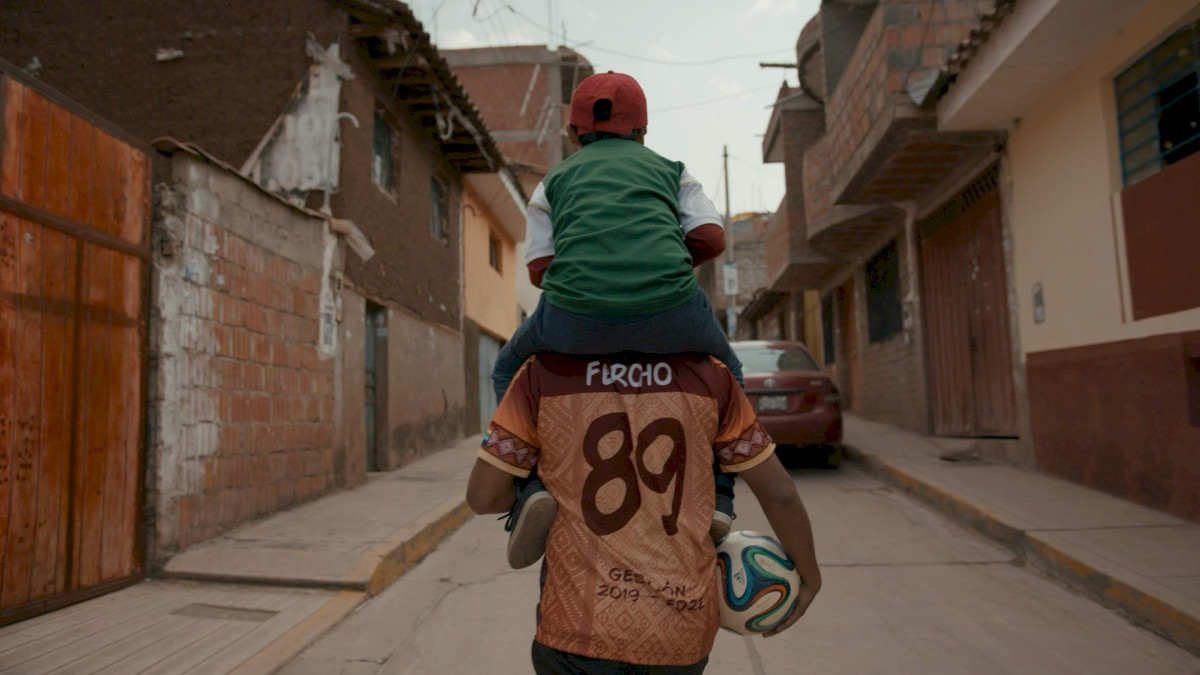
In “Runa Simi”, directed by Augusto Zegarra, Fernando and his son Dylan decide to create a Quechua-language dub of The Lion King, also known as the language of the Incas. What began as a project to revive a culture transforms into a shared journey in which the experiences of contemporary Indigenous communities intertwine with the nurturing of a father-son relationship.
[Four men stand in a forest; three of them are holding firearms, two are half-naked, and the man in the middle has a band tied around his head and holds a knife in his mouth, while the others are dressed in military camouflage clothing.]
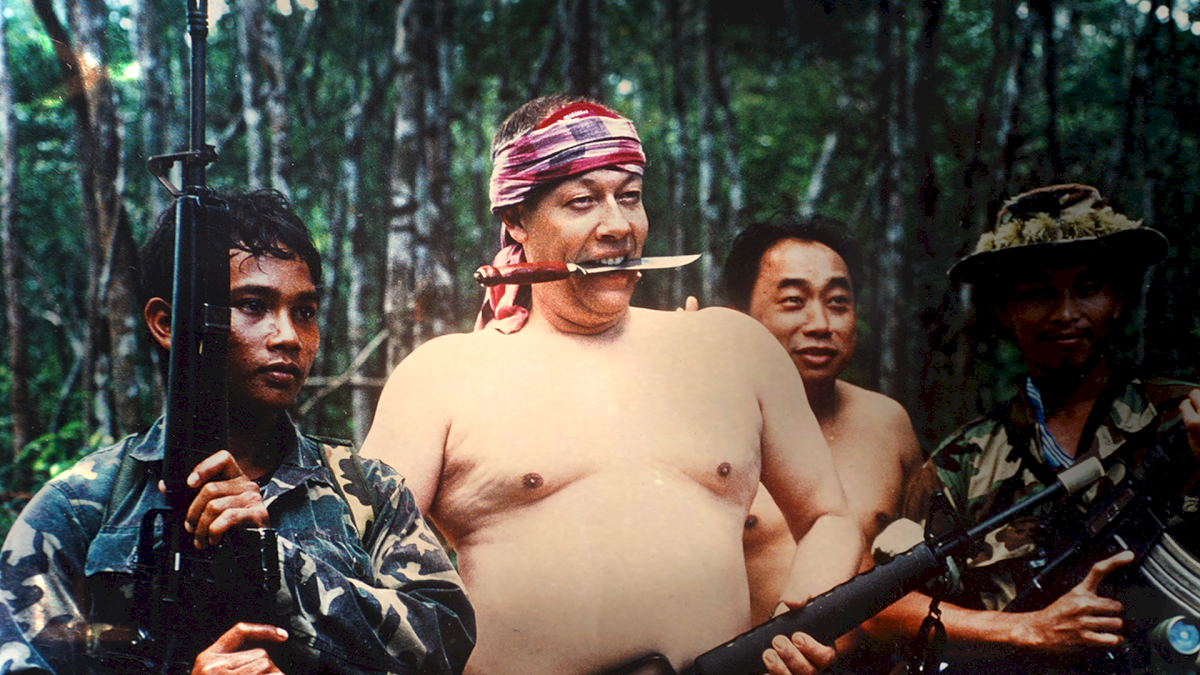
Everyone hides a secret. Didrik learns this when he discovers that his father, a television journalist by day, was a secret agent by night. The protagonist of “The Lives of My Father”, directed by Magnus Skatvold, tries to determine how much of what he knew about his father was an illusion. Partly constructed as a detective story, the film raises questions about trust when it is shaken by family secrets.
[A group of several dozen men stand on grass, most of them shirtless; some are clapping or looking straight ahead. A man in a white T-shirt stands out in the center, with green trees visible in the background.]
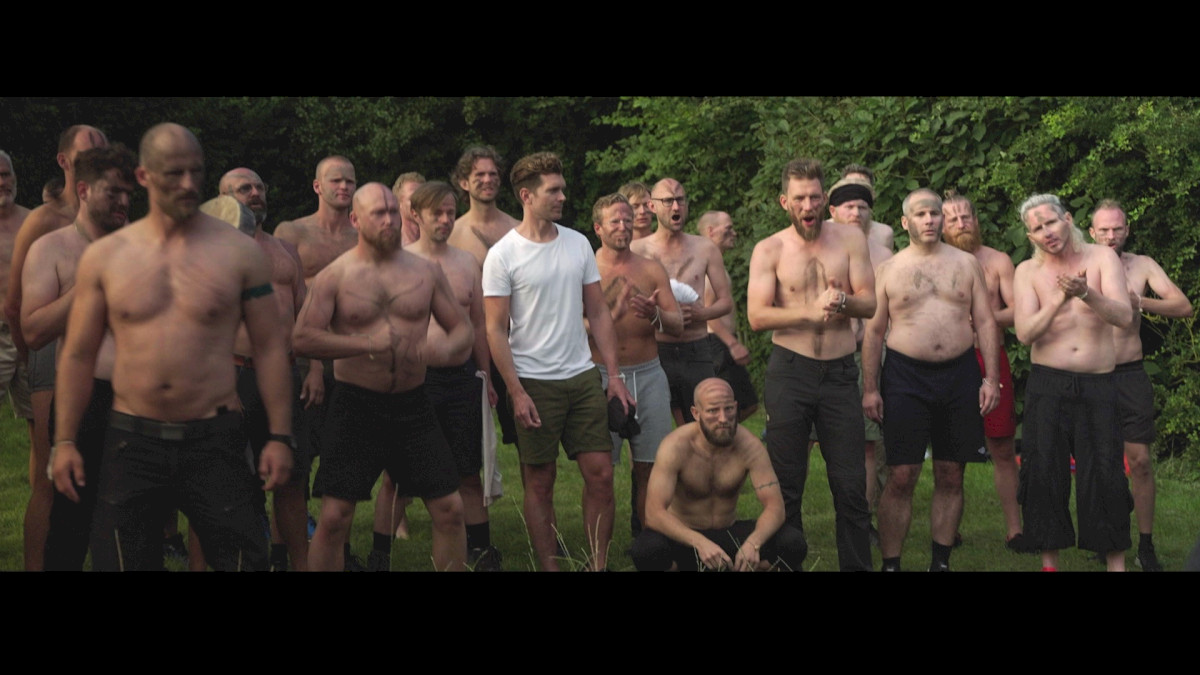
What happens when we challenge long-standing stereotypes of masculinity? “Confessions of a Swedish Man”, directed by Hampus Linder, seeks to answer this question. The protagonist, who considers himself a feminist, attends a men’s retreat in Denmark while trying to understand himself through the lens of being a man, a father and a son.
[A close-up of a boy’s face in warm, muted light; smiling, he squints one eye and holds a fork vertically next to his face, as if pretending to cover his eye with it.]
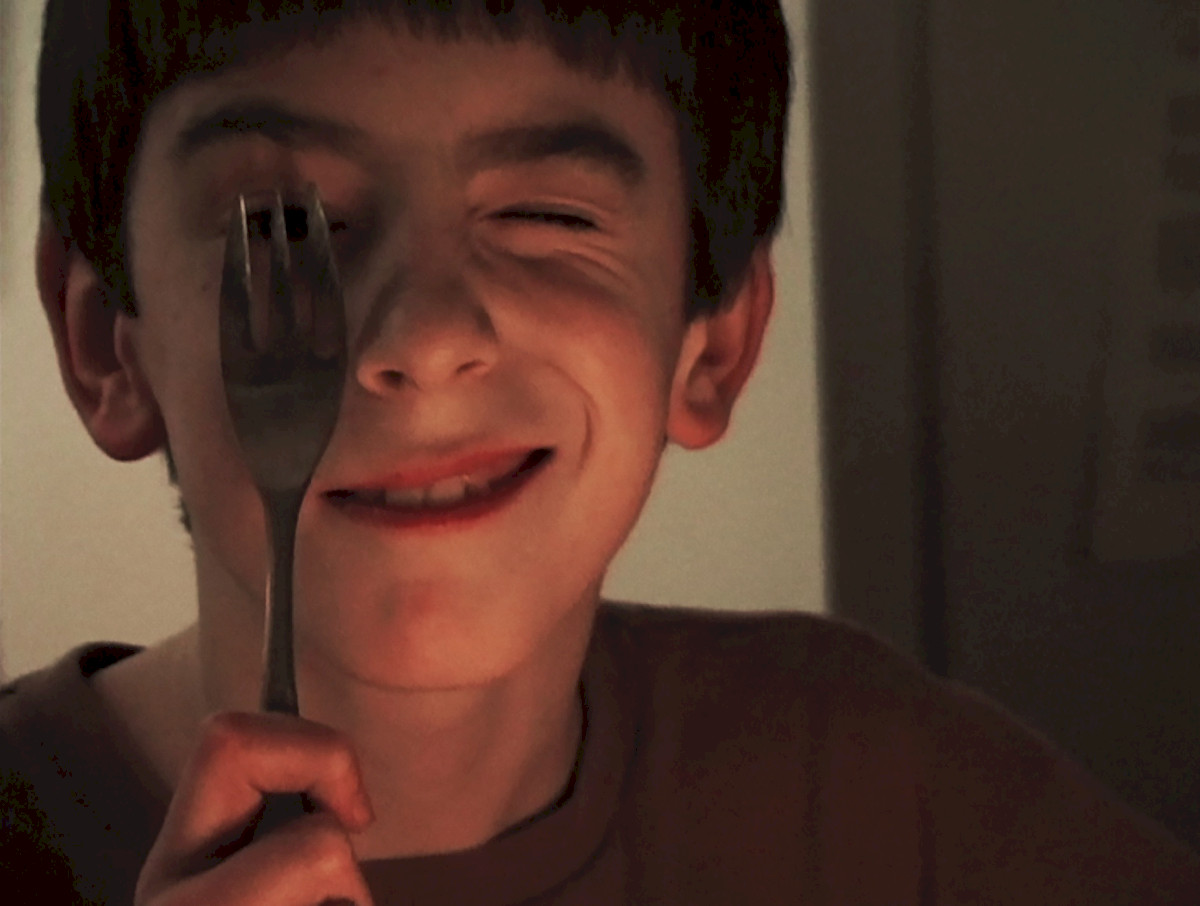
After the death of his son Adrian, the director of “Remake”, Ross McElwee, enters a period of mourning. He searches through archives and his own memories, attempting to transform pain into art. The film reconstructs an intimate portrait of life and loss, as well as the passage of time and memory.
[A close-up of a young man wearing glasses, carefully observing a jar filled with a yellowish liquid containing a small animal; the warm, moody lighting highlights his focused gaze.]
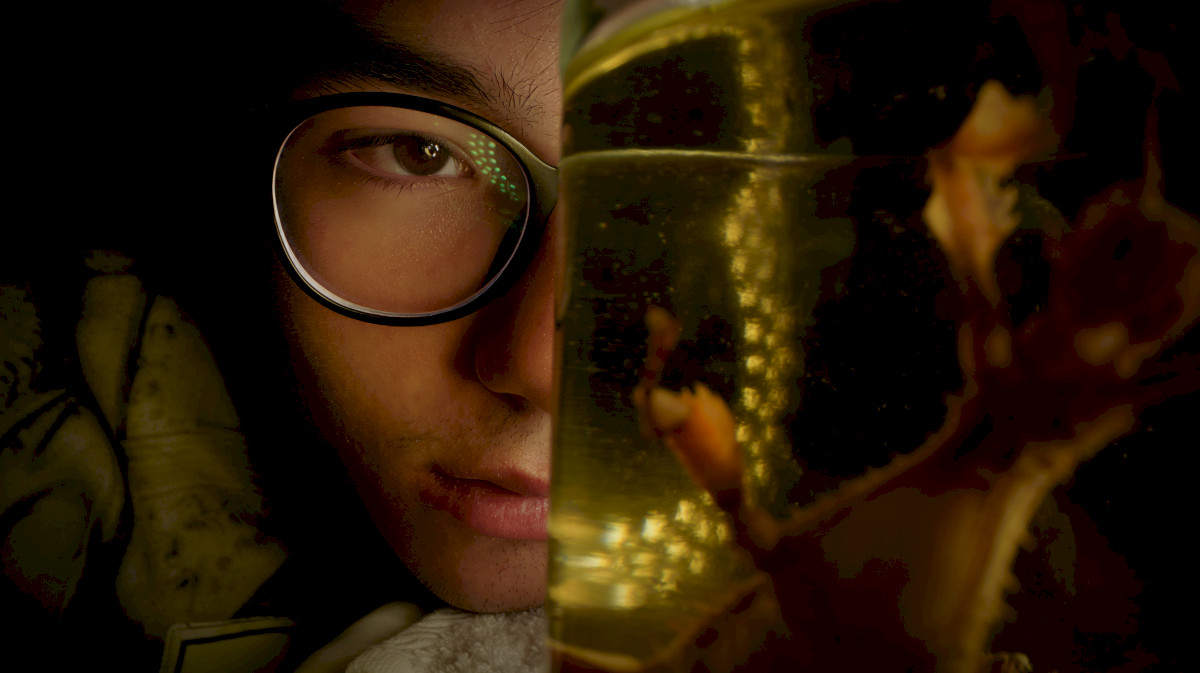
Can escaping into the world of imagination be a response to a lack of belonging? Like something out of a fairy tale, George, the protagonist of “Bugboy”, directed by Lucas Paleocrassas, befriends a cricket named Isabella, as an unconscious response to his parents traumatic divorce.
What is currently happening in Palestine?
The films presented in the section All Eyes on Palestine shed light on the political and social situation of Palestinians, portraying the daily lives of people living in the shadow of conflict and instability. In such conditions, is it possible to look to the future with hope? The section includes films addressing both the current situation and the events that led to it.
[A smiling woman wearing glasses and a green headscarf appears on a smartphone screen; the image shows a close-up of her face captured mid-laughter.]
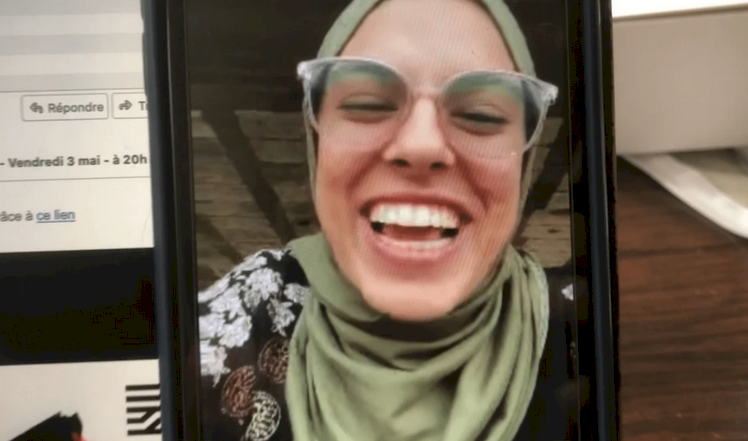
Fatma Hassona © Sepideh Farsi, Rêves d'Eau Productions
Fatem Hassouna – a brave 24-year-old Palestinian photojournalist and the protagonist of “Put Your Soul on Hand and Walk”, directed by Sepideh Farsi – documented the fate of Gaza’s residents in the heart of hell during the genocide carried out there by Israel. The day before she and seven members of her family were killed when their home was bombed by Israel, Fatem learned that the film had been selected for the Cannes Film Festival competition.
[A group of children sit in a circle on a wooden floor, drawing on sheets of paper; an adult man kneels beside them, accompanying them. In the center of the circle lie cushions and small objects, including a candle, string, and baskets filled with crayons.]
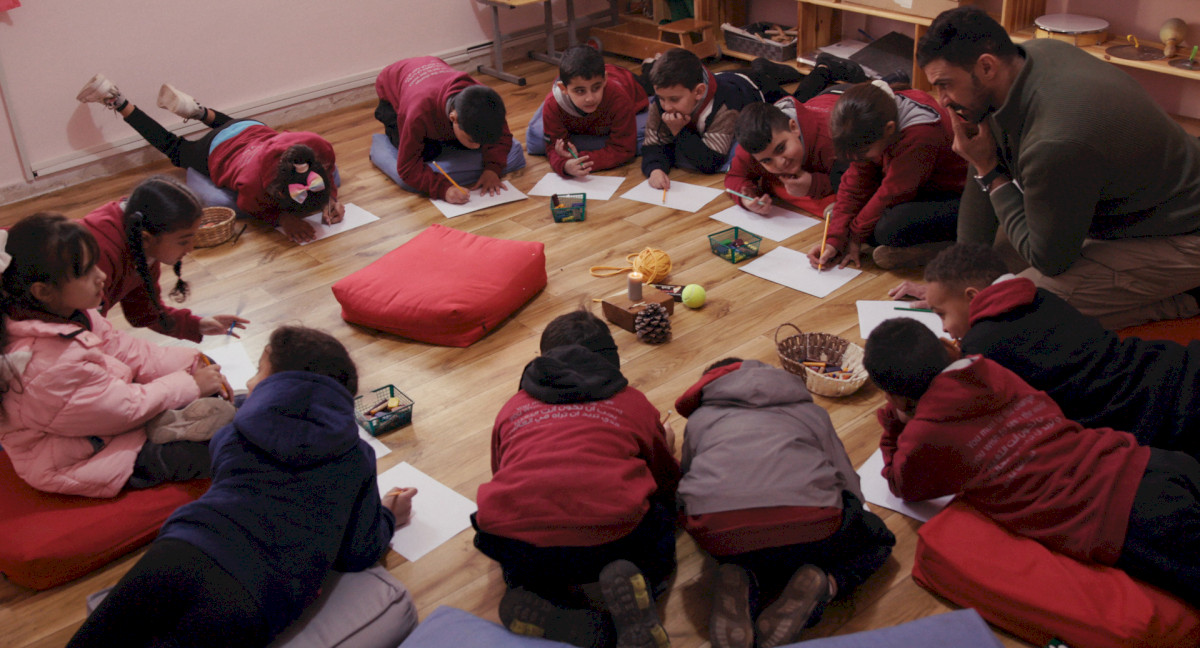
In the Israeli-occupied West Bank town of al-Eizariya, there is a primary school called House of Hope that teaches children tolerance and peace. The conflict spares none of its students. What happens when a child is prematurely forced into adulthood because the sounds of rockets and air-raid sirens are an inseparable part of growing up? “House of Hope” directed by Marjolein Busstra, attempts to answer this question.
[A man sits in a small screening room filled with old film projectors and reels. He rests his chin on his hand and looks toward a machine, while a projector glows on the right side of the frame.]
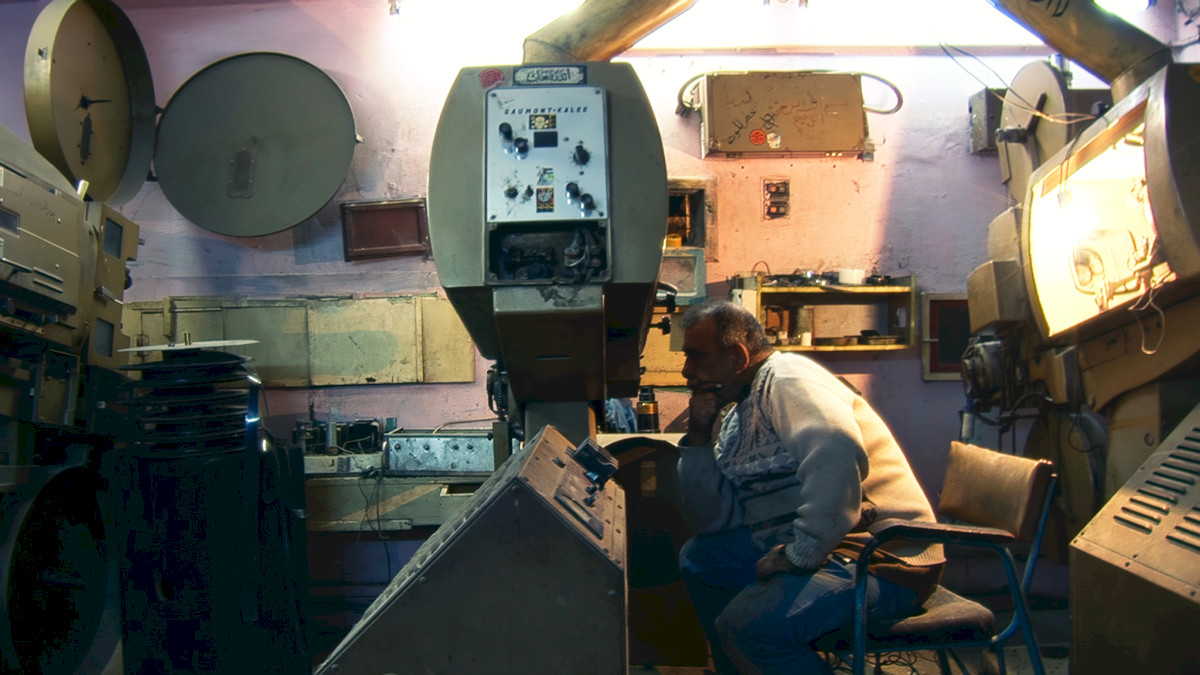
Hussein Darby, the protagonist of “Habibi Hussein”, directed by Alex Bakri, is the last projectionist of Cinema Jenin. Like the hero of "Cinema Paradiso", he embarks on a journey to start a 50-year-old projector while trying to capture the final memory of what has passed. Will there be a place for him in the newly renovated cinema now controlled by European activists who do not understand the needs of the local community?
[Three men dressed in medical attire appear to be performing a surgical procedure; the blurred part of another man’s face is visible. An overhead lamp hangs above them, with a green wall and part of a fifth person’s face in the background.]
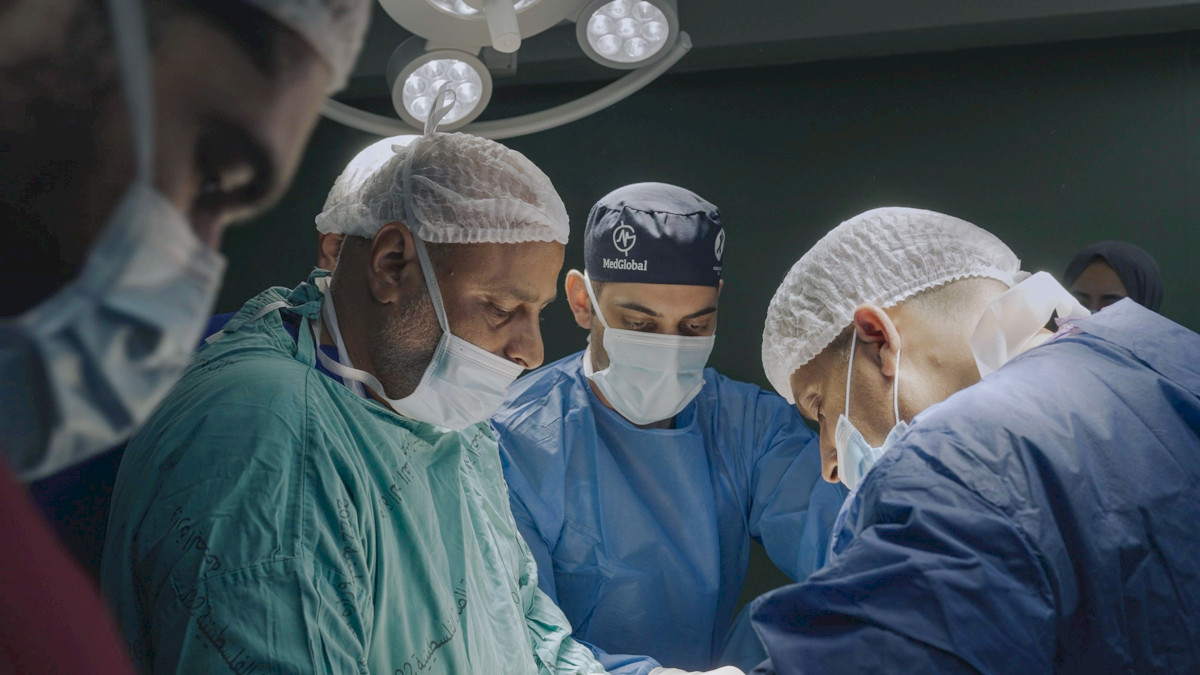
The protagonists of this section are often superheroes fighting for justice in extreme conditions. “American Doctor”, directed by Poh Si Teng, tells the story of three of them. A Palestinian, a Jew, and a Zoroastrian – doctors who come under fire – risk their lives to save others and reveal the truth about the genocide in the Gaza Strip.
[An old, slightly faded photograph shows an elegantly dressed couple standing before a red patterned backdrop; the man in a tuxedo holds a small child in his arms, while the woman in a long gown smiles at the camera. The photograph lies among other documents, with part of a birth certificate partially visible.]
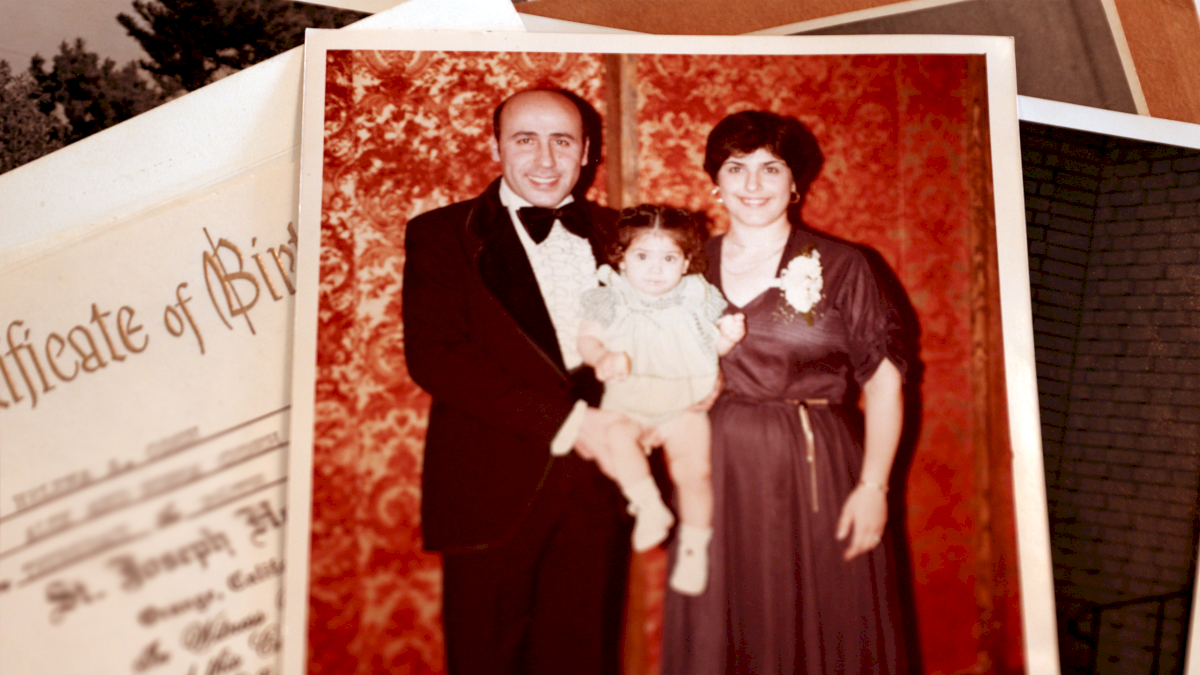
In October 1985 in California, Palestinian-American activist Alex Odeh was killed by a pipe bomb planted in his office. Despite clear evidence, the case has never been solved. Will this cinematic investigation uncover the truth? Find out by watching “Who Killed Alex Odeh?”, directed by Jason Osder and William Lafi Youmans.
[A green tractor with a trailer full of agricultural equipment drives across a cultivated field; in the distance, city buildings can be seen with dark smoke rising above them.]
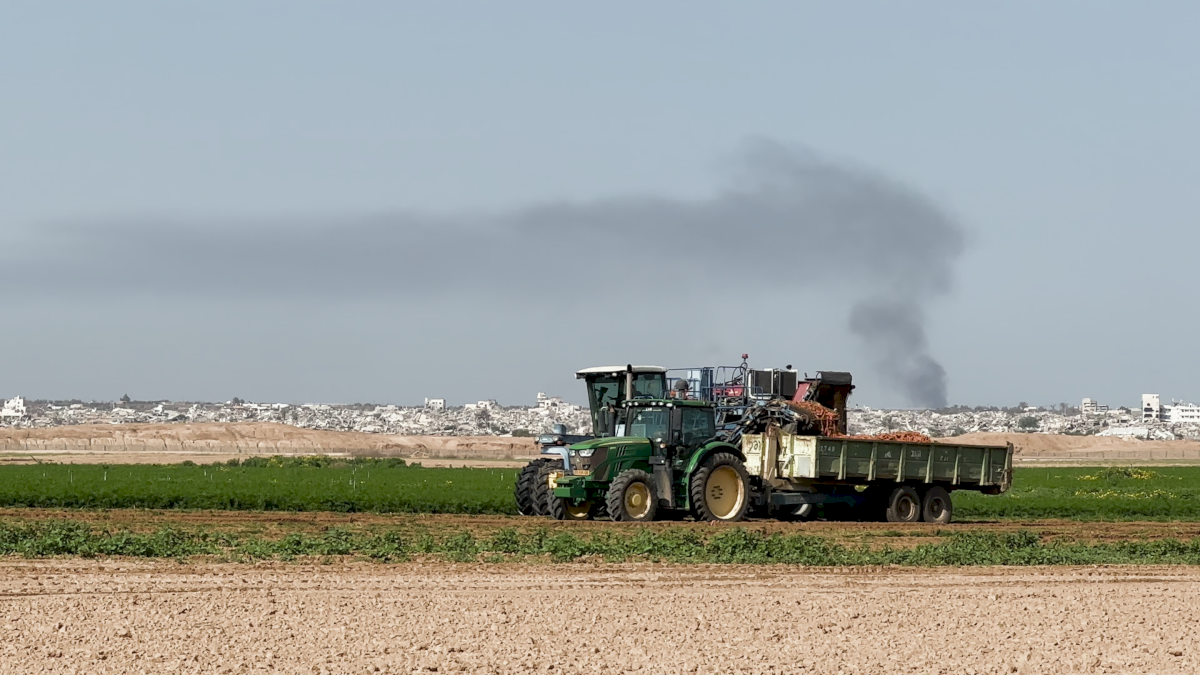
In “Collapse”, directed by Anat Even, shortly after October 7, 2023, Anat returns to a place that was once her home. She wanders through a burned-out kibbutz and fields now filled with machines of destruction. Beyond the fence, the Gaza Strip is being systematically annihilated.