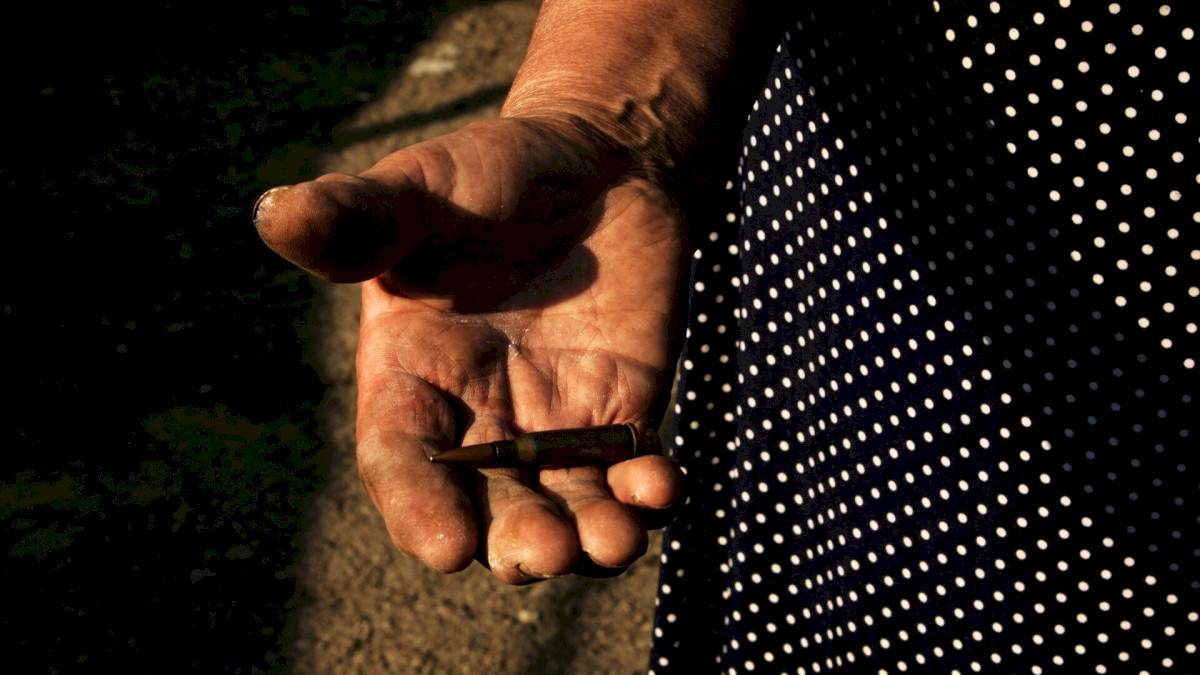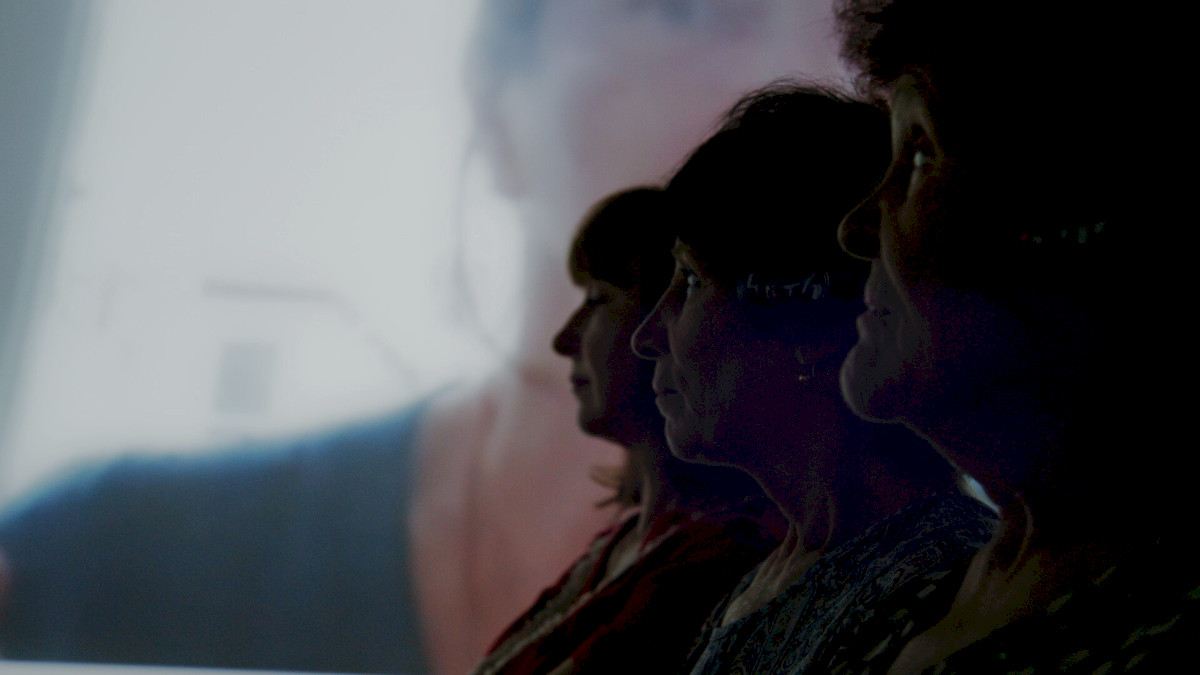
Three standing ovations and the Documentary Panorama Audience Award for the courageous protagonists and filmmakers of “Traces” at the Berlin International Film Festival are the clearest proof of how urgently solidarity is needed in the face of Russian war crimes. The film became the favourite documentary of audiences in the Panorama section at one of the world’s most important film festivals.
Telling the story of members of SEMA Ukraine, who document cases of torture and sexual violence committed by Russian forces, the film is not only a story of suffering but also of hope. Artistically mature and deeply moving, it speaks about reclaiming agency after trauma and the healing power of sisterhood. “Traces” is the latest work by Ukrainian director Alisa Kovalenko, whose previous films “We Will Not Fade Away” and “My Dear Théo” were also presented at MDAG.
The Polish premiere will take place during the 23rd edition of Millennium Docs Against Gravity in May 2026. The film is co-directed by Marysia Nikitiuk and produced by an international Polish–Ukrainian team: Olha Bregman, Natalia Libet and Violetta Kamińska, Izabela Wójcik, Dariusz Jabłoński of Message Film. The editing was overseen, among others, by Milenia Fiedler, sound by Maciej Amilkiewicz and Mateusz Hulboj, and the original score was composed by Wojciech Frycz.
The premiere of “Traces” will be accompanied by a campaign supporting people who have experienced wartime violence.
We Cannot Look Away from Evil
“Traces” follows a group of Ukrainian women who, after surviving sexual violence and torture, break the silence imposed by shame and fear. At the forefront of SEMA Ukraine stands Iryna Dovhan, whose personal experience has made her one of the key figures documenting conflict-related sexual violence (CRSV). After surviving captivity in eastern Ukraine in 2014, she became one of the first women to publicly speak about sexual violence committed by Russian soldiers during Russia’s invasion of Ukraine.
Today, as head of SEMA Ukraine, she supports survivors – women and men – helping them give testimony safely, access assistance, and seek recognition of these crimes under international humanitarian law. Around her, she has built a community of people who refuse to be defined by trauma and who, through action and mutual support, reclaim hope. The film gives voice to women from across Ukraine – from Donbas to Kherson and the Kyiv region – who endured violence during occupation. The protagonists come from diverse backgrounds: Iryna Dovhan was an economist and beauty salon owner; Olha Cherniak a district administration official; Tetiana Vasylenko and Galyna Tyshchenko entrepreneurs; Nina a farmer; Liudmyla Mefodivna Mymrykova a Ukrainian language and literature teacher whose school was bombed.
With tenderness and sensitivity, “Traces” shows that even the most brutal and systemic evil used by Russia as a weapon cannot defeat solidarity and sisterhood. Above all, however, the film urges us not to look away – a call echoed by both the protagonists and the filmmakers as they confront stigma. The title reflects the many layers of violence: from visible destruction to invisible psychological and social wounds. It is not only a record of war crimes, but a testament to community and determination.
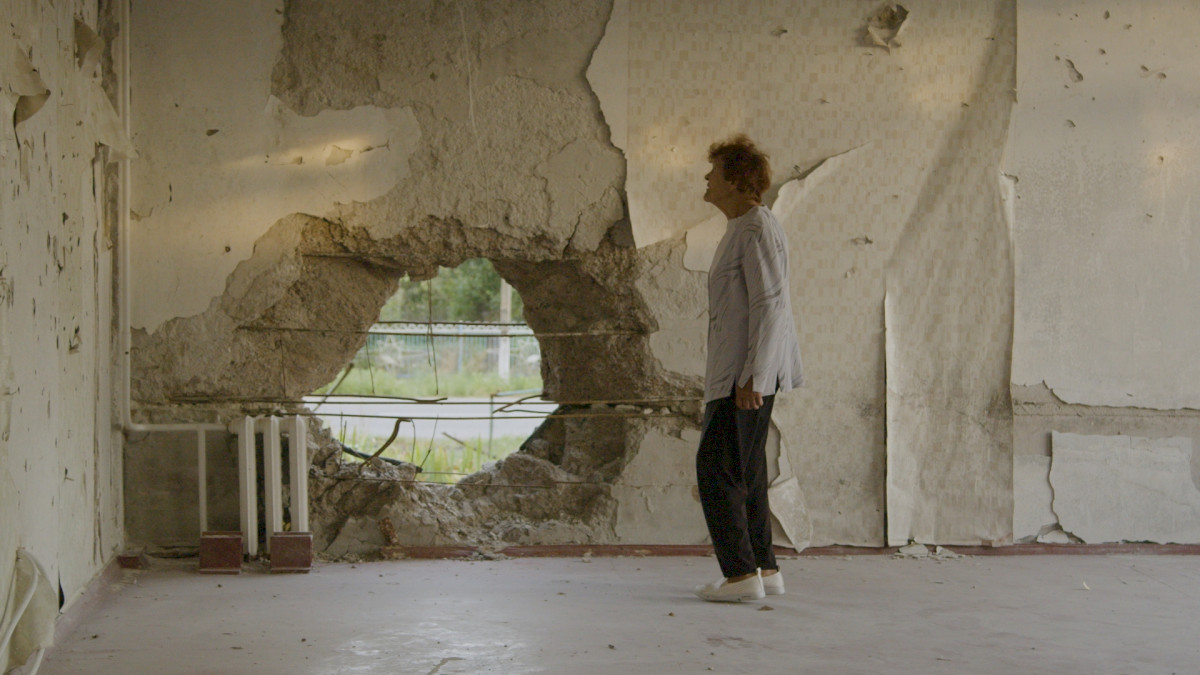
They Refuse Silence – The Protagonists and Filmmakers of “Traces”
For me, this film is more than just a film. It is a continuation of my purpose – to ensure that the perpetrators will ultimately be held accountable. It does not simply break the global “silence”; it breaks it so loudly that I hope it will leave a clear and lasting echo around the world. After everything I went through, the most painful realization for me was understanding that Russia will never extradite the criminals, that they will never be punished. Over time, even those closest to me began to forget my traumatic experience. Only this film gave me hope that memory will not disappear, that our testimonies are now permanently recorded. That I am no longer alone in the world in my fight against evil – that memory will not fade, that our testimonies have been preserved forever. That I am no longer alone in my fight against evil
– says Iryna Dovhan, the film’s central protagonist.
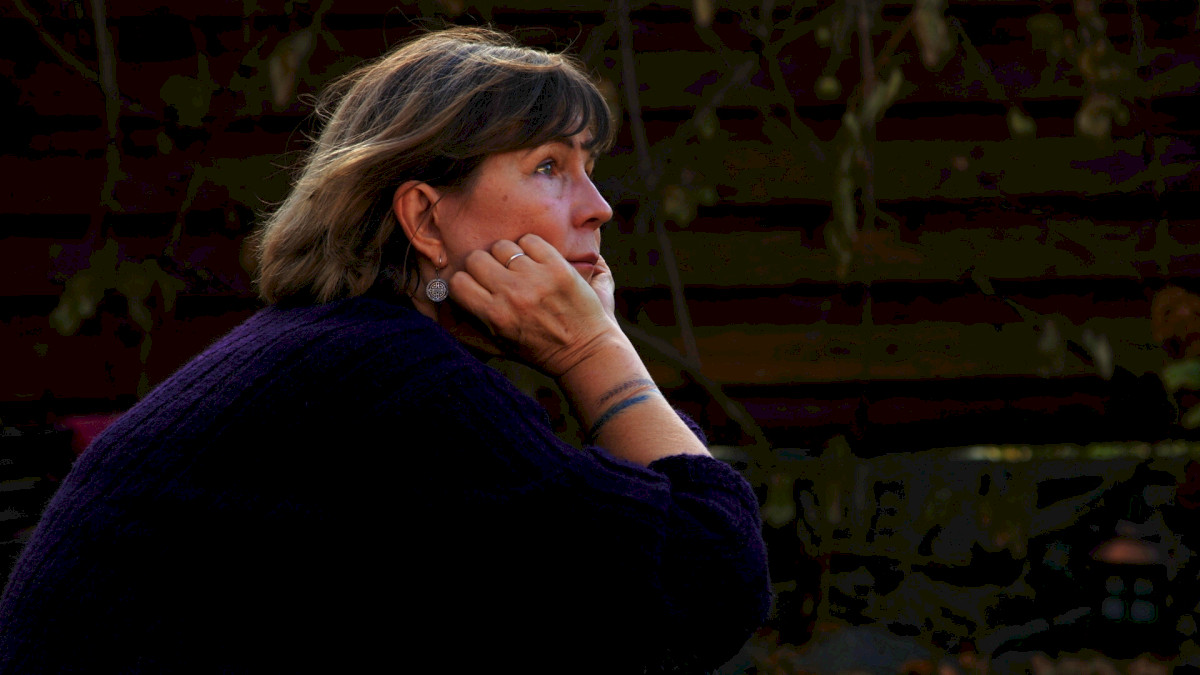
Director Alisa Kovalenko speaks about the project and her own experience:
The theme of TRACES resonates deeply with me, at the core of my own being, as it lifts the veil on conflict-related sexual violence – an experience I have lived through myself. This film speaks about a community to which I belong and with which I maintain profoundly strong ties. In the spring of 2014, I survived Russian captivity and sexual violence in Donbas. As a young filmmaker in the aftermath of the Maidan revolution, I felt the need to document the rapidly unfolding events in eastern Ukraine – a local uprising instigated and directly organized by Russia. After two weeks of filming in the Donetsk region, then partially controlled by Russian and pro-Russian local forces, I was captured, interrogated, and raped by a Russian counterintelligence officer. After four days of captivity, the Russian officer released me, saying: You should thank me for the fact that you weren’t executed.
I could not speak about what had happened to anyone close to me – my family, my partner, or my friends. I was afraid of traumatizing them and did not know how to talk about it at all. At some point, I decided to speak up, and in 2016 I testified before the Ukrainian Helsinki Human Rights Union. I later learned that I was the first woman in Ukraine to speak openly and publicly about such a crime. It was not because I was the only one, but because a thick wall of silence and stigma had trapped those who had lived through this experience.
Our Voice Is Our Resistance – Support SEMA Ukraine
The release of “Traces” is accompanied by a social campaign supporting the work of SEMA Ukraine, which calls for sustained international attention to conflict-related sexual violence (CRSV) as a grave violation of human rights and international humanitarian law. The organization advocates for survivor-centered justice, long-term psychosocial support, and effective accountability mechanisms.
Russia uses sexual violence as a psychological weapon to intimidate, humiliate, and suppress the Ukrainian people. According to the UN Human Rights Monitoring Mission in Ukraine, more than 90% of former Ukrainian military and civilian captives reported torture and inhumane treatment by Russian soldiers. Russian torture – including sexualized torture – is so widespread, systematic, and sanctioned by the highest political and military leadership of the Russian Federation that it amounts to crimes against humanity.
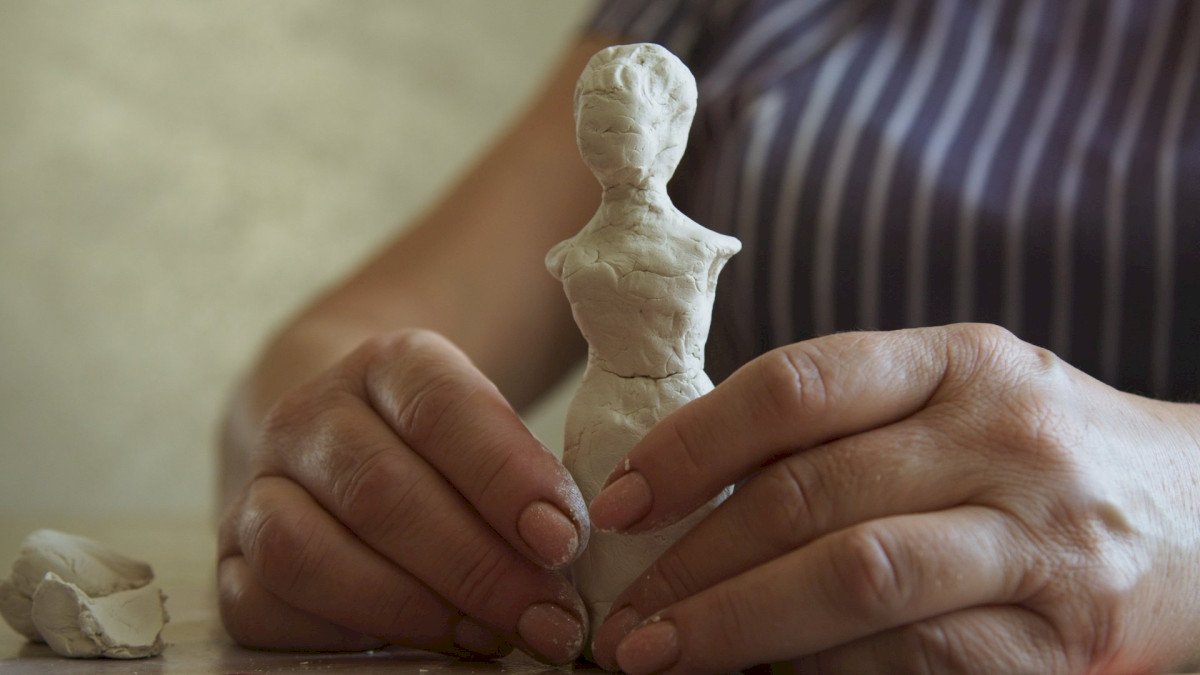
Together with the protagonists and filmmakers of “Traces” Millennium Docs Against Gravity encourages audiences to stand in solidarity with Ukrainian survivors of sexual violence resulting from Russian aggression. You can do so by supporting SEMA Ukraine – a survivor-led network – in its mission to raise awareness, break stigma, and provide assistance to women and men affected by CRSV.
SEMA website: https://semaukraine.org.ua/en/
“Traces” by Alisa Kovalenko, co-directed by Marysia Nikitiuk, will have its Polish premiere at the 23rd edition of Millennium Docs Against Gravity, held from 8–17 May 2026 in cinemas in Warsaw, Wrocław, Gdynia, Poznań, Katowice, Bydgoszcz, and Łódź, and from 19 May to 1 June online at mdag.pl. The festival’s title sponsor is Bank Millennium.