In Search of Great Cinema. The Main Competition at the 23rd MDAG
The twelve films that constitute this year’s Main Competition are the absolute highlight of what is happening currently in documentary cinema. They are eligible for nine awards across the festival’s six cities.
This year’s Main Competition jury, which will deliberate during the Warsaw edition of the festival, comprises: Talal Derki – Oscar®-nominated Syrian director and producer; Lea Glob – filmmaker and director of the film “Apolonia, Apolonia”; and Jessica Hargrave – Oscar®-nominated film producer, who has worked on such films as “Come See Me in a Good Light”.
The 23rd MDAG will take place from 8 to 17 May 2026 in cinemas across seven cities (Warsaw, Wrocław, Gdynia, Poznań, Katowice, Łódź and Bydgoszcz) and from 19 May to 1 June online at mdag.pl! It is Poland’s largest film festival and the second-largest documentary film festival in Europe, attracting over 181,000 audience members in 2025.
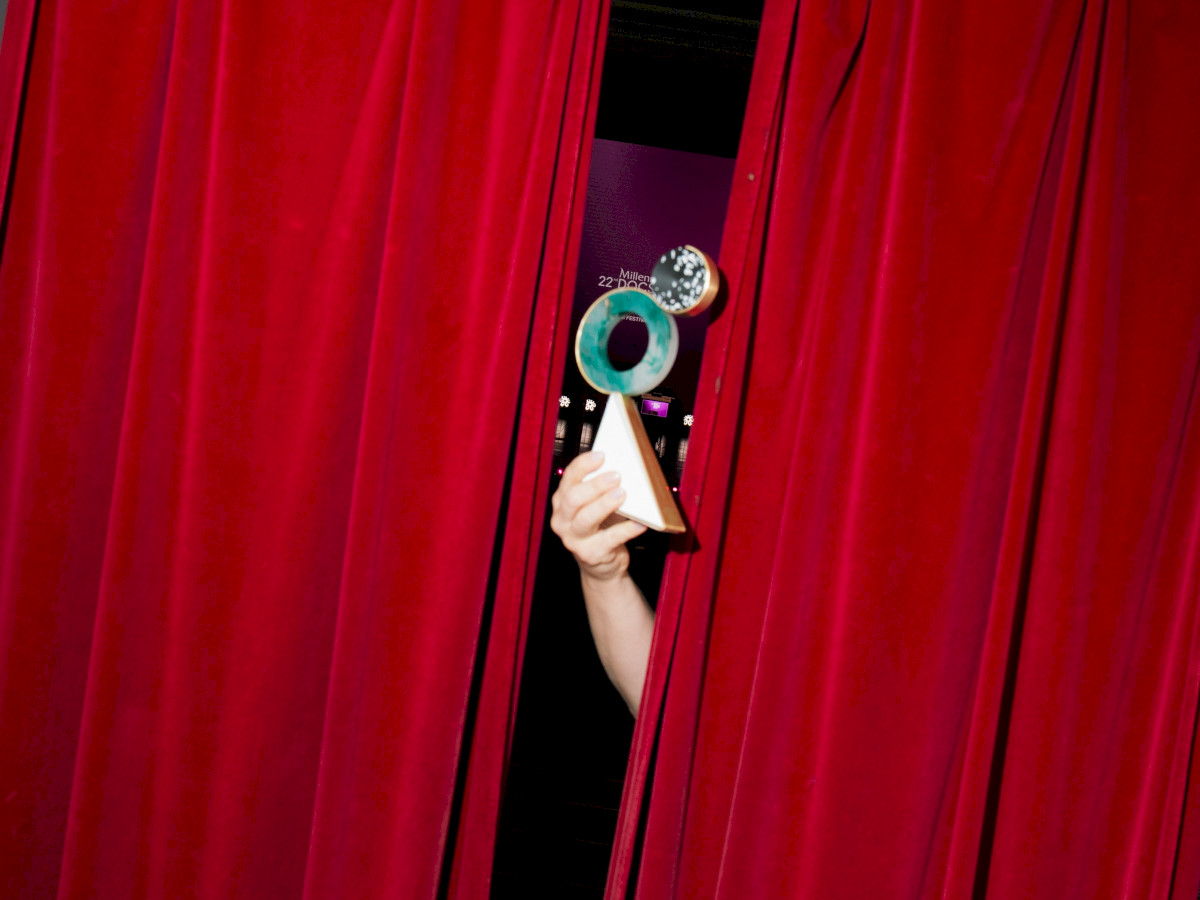
Photo: Marek Kita
[Red curtains parted in the middle; a hand holding an award statuette emerges from behind them]
Awards in the Main Competition
MDAG has been included in the list of festivals qualifying for the Oscar® in the Best Documentary Feature Film category. Therefore, the winner of the Grand Prix – the Bank Millennium Award has a clear path to one of the most prestigious awards in the world of cinema. Awards for Best Cinematography and Best Editing will also be presented in the Main Competition. For the first time, a three-member FIPRESCI Jury will present its award.
In addition, awards will be presented in other cities by local juries: the Lower Silesia Grand Prix (Wrocław), the Silesian Audience Award (Katowice), the Mayor of Gdynia Award, the City of Poznań Freedom Award, and the Bydgoszcz Art.Doc Award.
This year, MDAG has also become home to a new, prestigious award: the FIPRESCI Documentary Grand Prix. Each year, it will be presented during the festival's opening gala to the best film of the previous year, selected by international film critics.
MDAG Artistic Director about the Main Competition
“The notion of 'searching' is persistent in the films presented in the Main Competition in many forms. Whether it is a literal search for a missing son in ”Closure”, a search for home in ”A Fox Under a Pink Moon”, or looking for a distinctive bird in ”Whispers in the Woods”, the exploration continues into the formal construction of these titles. With a unique immersive experience offered by ”Nuisance Bear”, carefully crafted shots in ”To Hold a Mountain”, or an incredible blend of fiction and documentary in ”A Child of My Own”.
The stories are also strongly set in landscapes where they take place – the town of ”Mariinka” is both a cause of division which equally formed a brotherly bond, Iceland in ”Time and Water” is magnificent inasmuch as showing us what is at stake for humanity, with ”Wax & Gold” telling a story of a nation through the perspective of a hotel.
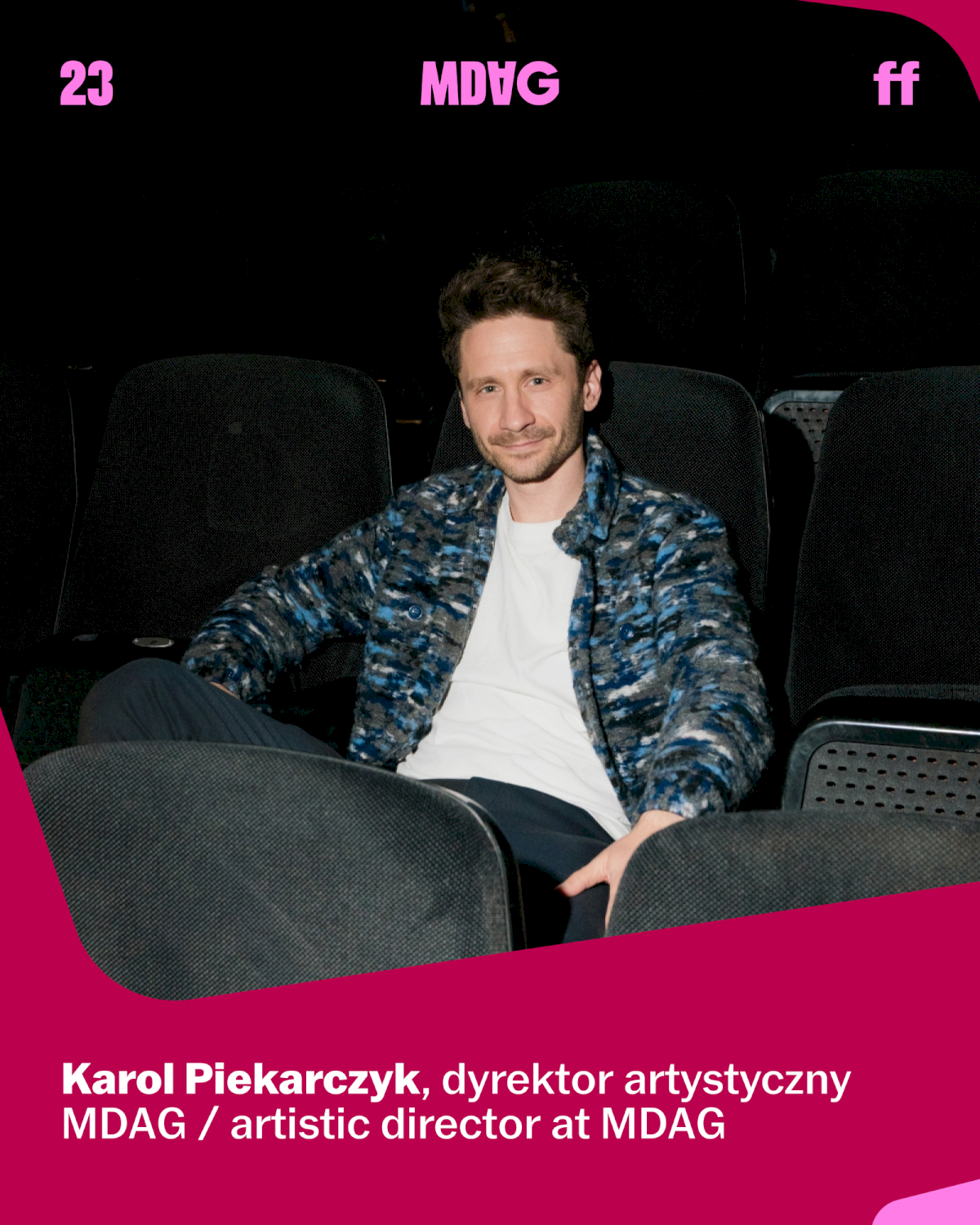
[Graphic: in the photo, a man sits in a black armchair in a cinema hall; text: Karol Piekarczyk, Artistic Director at MDAG]
Searching is also what we do when we think about our relations with others. A son faces growing up with the aid of his father in ”Bugboy”, a director examines friendship and loss in ”Yo (Love is a Rebellious Bird)” and another director puts herself in front of the camera to understand the relationships which have forged her at her birthplace and ones which she encounters in her new home in ”Two Mountains Weighing Down My Chest”.
At least the destination of the search for great cinema might be in sight, go and see these films!”
– Karol Piekarczyk, artistic and managing director at MDAG
More about the films in the Main Competition at the 23rd MDAG
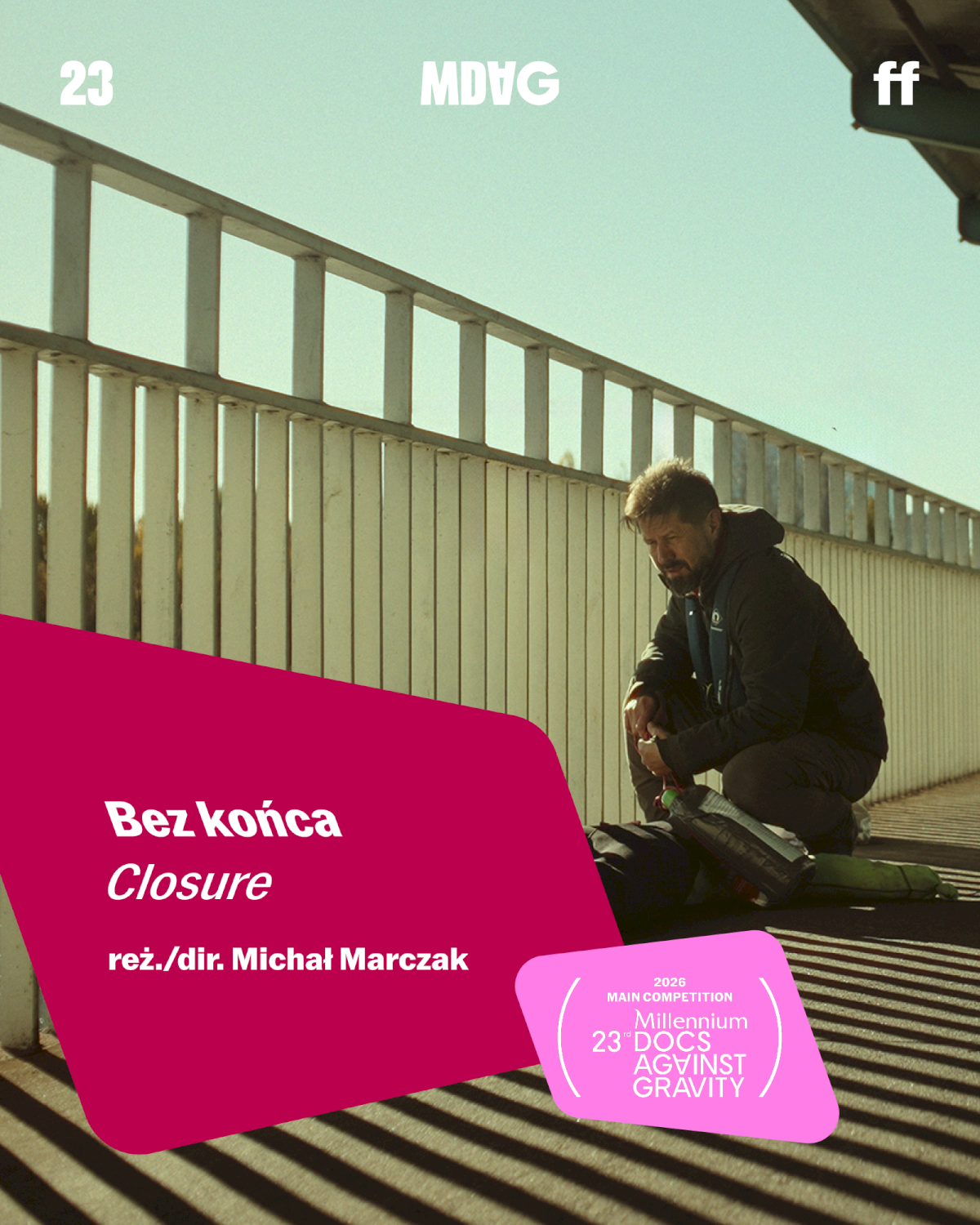
[Graphic: in the photo, a man crouches by a railing on a bridge; text: Closure, dir. Michał Marczak]
In Michał Marczak’s “Closure”, Daniel sets off on an endless search. He did not hear his son Krzysiek leaving the house and heading to the bridge over the Vistula, where he was last seen. A camera captured him — and then he disappeared: either he jumped into the river or walked off the bridge. Since then, Daniel and his wife have lived suspended between hope and fear. Unable to wait for a breakthrough in the investigation, the father builds a boat equipped with cameras and drones to search the river himself. The search consumes him. The lonely hours spent on the boat become a chance for him to reckon with his life so far.
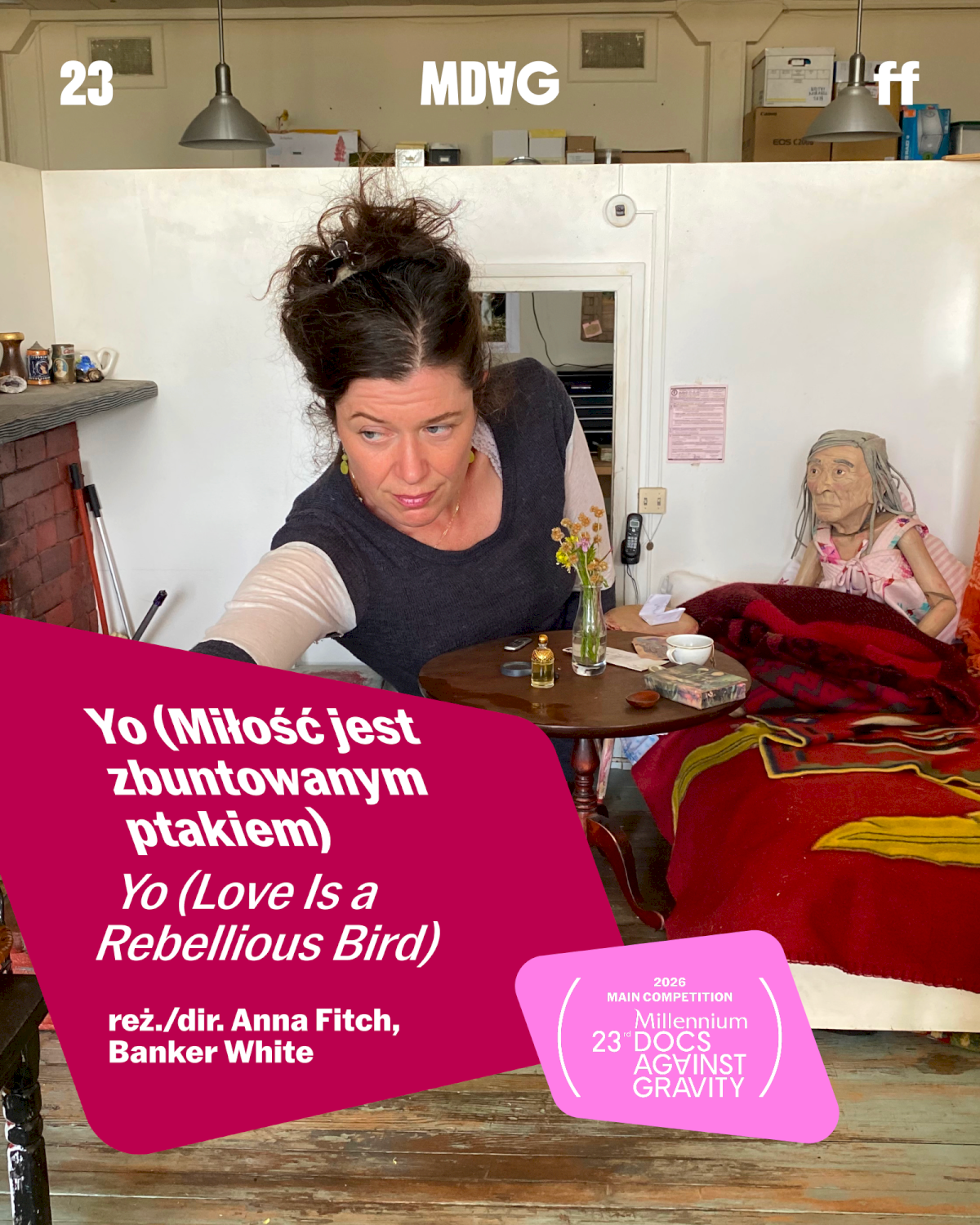
[Graphic: in the photo, a woman surrounded by small objects, like from a dollhouse; text: Yo (Love Is a Rebellious Bird), dir. Anna Fitch, Banker White]
Anna is also trying to find meaning after the loss of a loved one. Following the death of her friend Yo, Anna obsessively recreates her house at a 1:3 scale for a marionette bearing the same name. When they met, Yo was 73 and Anna only 24. By constructing this miniature space, Anna creates a world where Yo’s stories can continue and their closeness can endure. “Yo (Love Is a Rebellious Bird)” by Anna Fitch and Banker White reveals the power of artistic creation as a way to process and share grief and love.
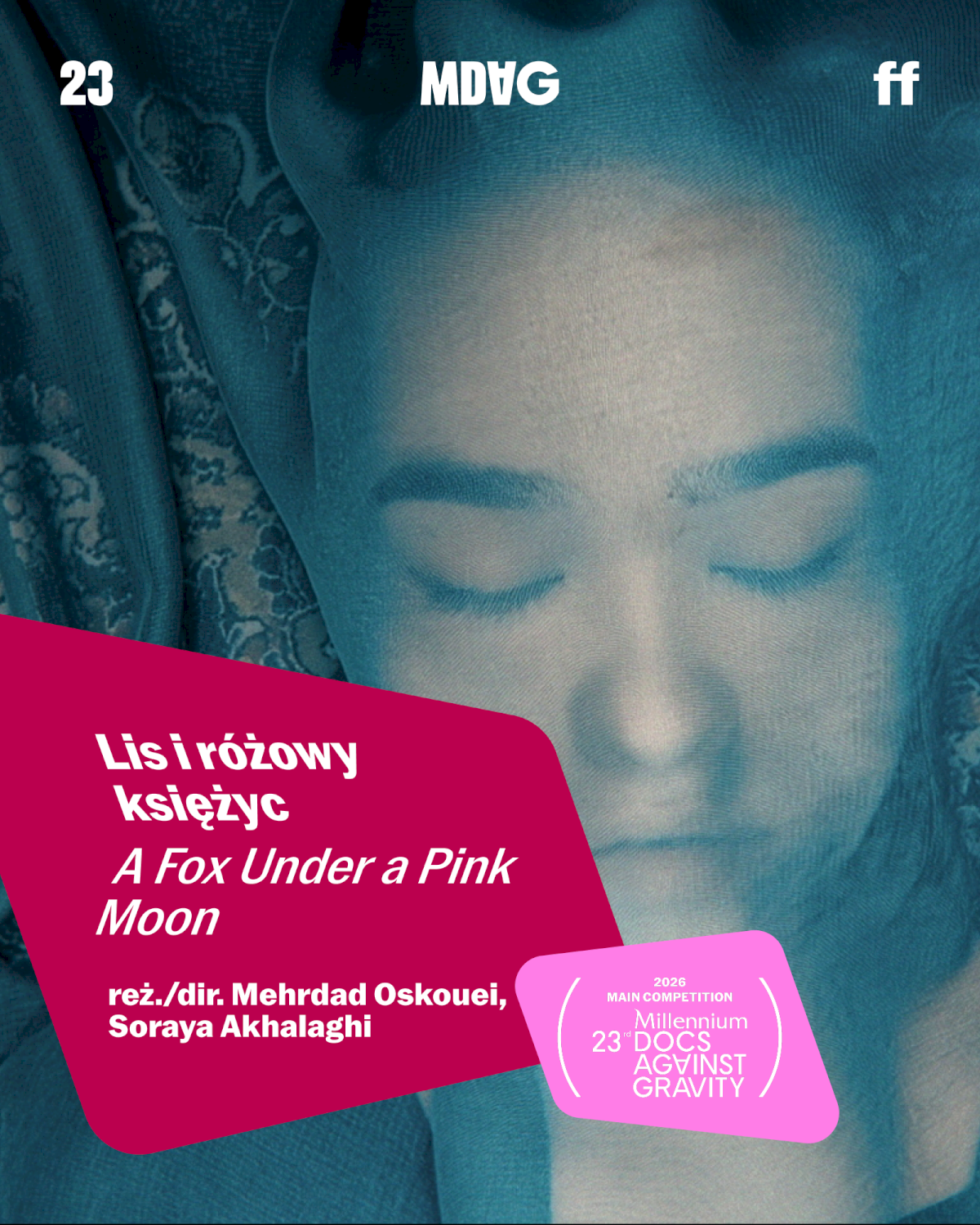
[Graphic: in the photo, a woman covered with a transparent material; text: A Fox Under a Pink Moon, dir. Mehrdad Oskouei, Soraya Akhalaghi]
Soraya has not found a home yet. For five years, 16-year-old Soraya Akhalaghi filmed key moments of her life on a mobile phone. During this time, she created striking drawings and sculptures while attempting to escape Iran, fleeing a violent husband to join her mother in Austria. Co-directed by her and Mehrdad Oskouei, “A Fox Under A Pink Moon” abandons a traditional documentary structure in favor of a form built on images, gestures, and symbols. It gives voice to Soraya as she embarks on a journey, fuelled by youthful courage, to discover her identity and find a new home.

[Graphic: in the photo, a woman in a colorful outfit made of various materials and objects; text: Two Mountains Weighing Down My Chest, dir. Viv Li]
The film “Two Mountains Weighting Down My Chest” also explores the theme of searching for one's place in the world. Its director and protagonist, Viv Li, raised in Beijing in the 1990s and now living in Berlin, exists between two completely different worlds: the progressive scene of the German capital and the traditional life of her family in China. The titular “two mountains” serve as a metaphor for the weight of these opposing pressures: freedom, individualism, and artistic experimentation on one side, tradition, family, and loyalty to her roots on the other.

[Graphic: in the photo, a young woman, a pasture in the background; text: To Hold a Mountain, dir. Biljana Tutorov, Petar Glomazić]
Meanwhile, the protagonists of “To Hold a Mountain”, directed by Biljana Tutorov and Petar Glomazić, will not let anyone take their land away. Gara and her daughter Nada return every year to their family pastures. Living according to nature’s rhythm, they preserve the fragile continuity of tradition and memory. This order is disrupted when the government announces plans to establish a NATO-backed military training ground on the site. In the face of this threat, Gara emerges as a leader of the local community, becoming the public face of resistance against the militarization of the landscape. It is a story about belonging, female resilience, and perseverance in the face of contemporary forms of domination.

[Graphic: in the photo, a polar bear emerges from the water; text: Nuisance Bear, dir. Gabriela Osio Vanden, Jack Weisman]
It is not only people who face displacement from the land they have always lived on. Churchill, Manitoba, affectionately known as the “Polar Bear Capital of the World,” provides the backdrop for a film depicting the tense coexistence of humans and bears. In “Nuisance Bear”, directed by Gabriela Osio Vanden and Jack Weisman, the story unfolds through the eyes of an Inuit narrator, whose observations resist easy conclusions.

[Graphic: in the photo, the face of a young boy half-covered by a lit jar; text: Bugboy, dir. Lucas Paleocrassas]
The story of Yorgos shows just how much we could gain from a friendship with animals. This shy teenager with a vision impairment struggles to connect with others after his parents’ divorce. His bond with a cricket named Isabella becomes a catalyst for transformation and self-discovery. Lucas Paleocrassas’s “Bugboy”, which will have its international premiere at MDAG, blends realism with a metaphorical fairy-tale tone, creating visuals that are at once realistic and poetic.
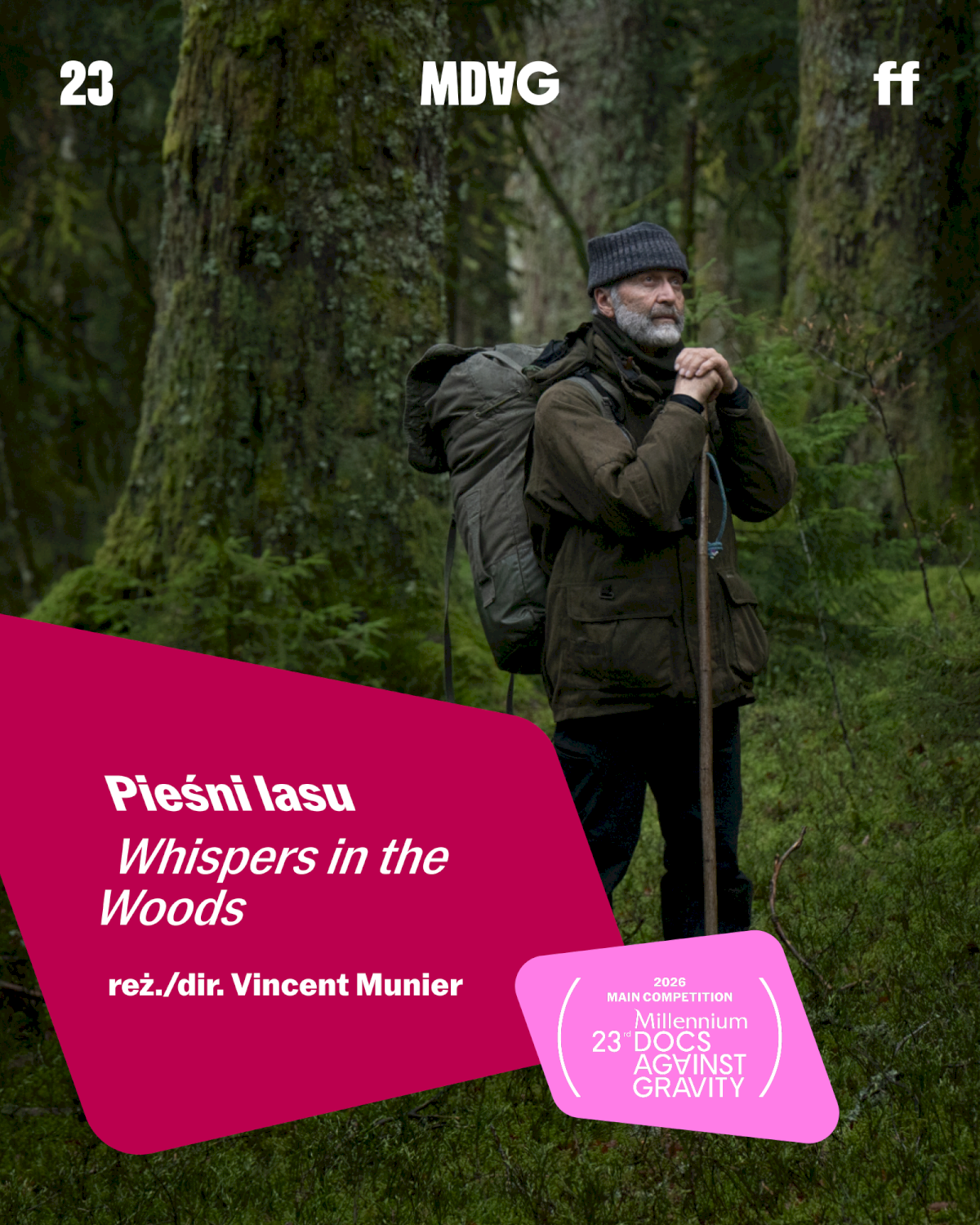
[Graphic: in the photo, an older man with a backpack stands with a forest in the background; text: Whispers in the Woods, dir. Vincent Munier]
Vincent Munier, the acclaimed creator of ”The Velvet Queen”, also reflects on the beauty of nature. In “Whispers in the Woods”, together with his father and his son, Vincent Munier explores life in the wild woods. The camera not only records images but, above all, “listens” to the forest as a living organism, where movement and sound form part of a complex web of life. Yet this is not only a story about the pleasure of connecting with nature, but also about family and the ways we can build strong bonds with those closest to us.

[Graphic: in the photo, a man stands next to a cage; text: Wax & Gold, dir. Ruth Beckermann]
For the director of “Wax & Gold”, a stay at the legendary Hilton hotel in Addis Abeba and Kapuściński’s “The Emperor” serve as a point of departure for a multilayered reflection on Ethiopia’s imperial past. Master of documentary cinema Ruth Beckermann intertwines personal experience with historical essay, revealing local perspectives and African contexts that shape contemporary understandings of the country.
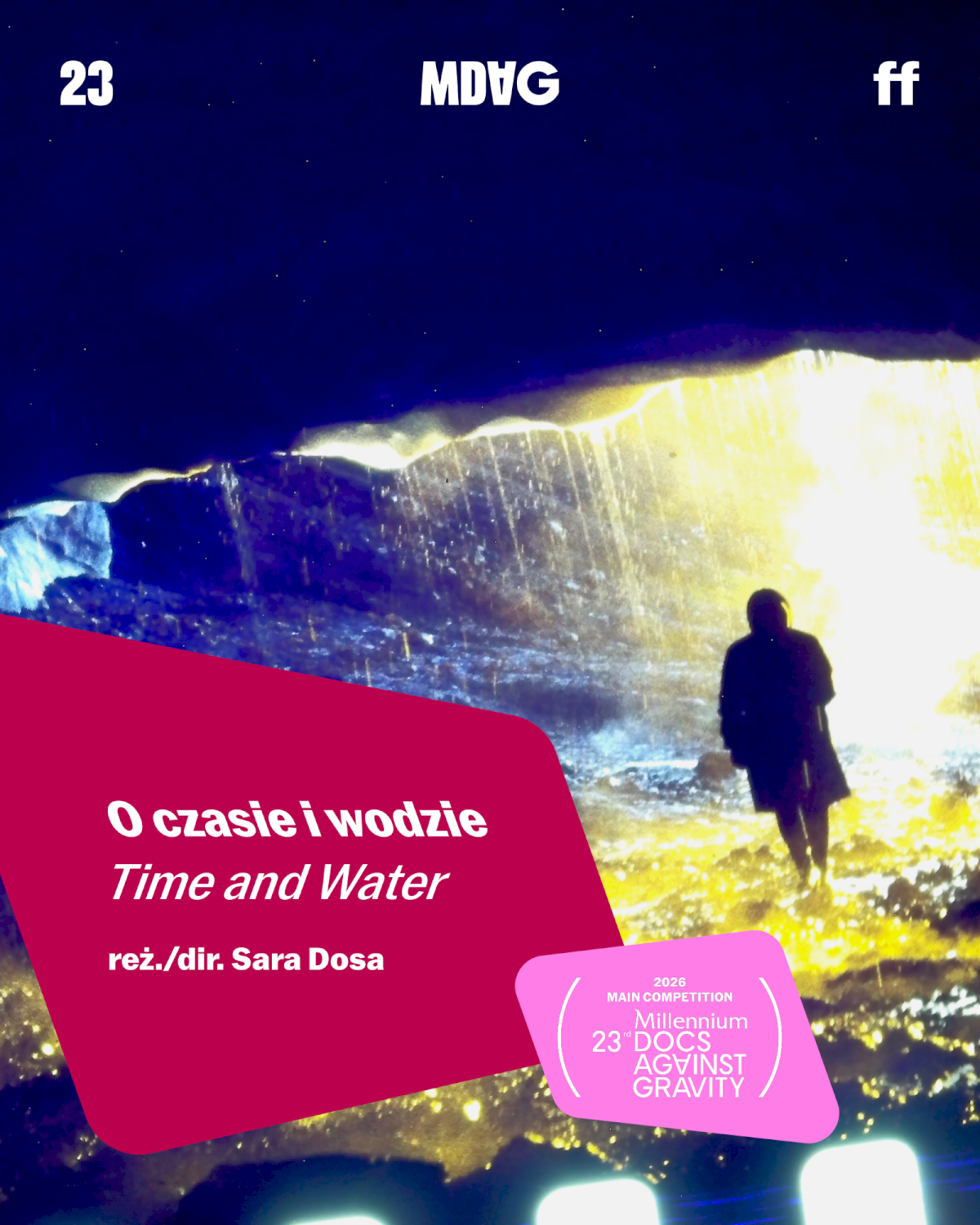
[Graphic: in the photo, a person exits a cave, blue and yellow light filtering through; text: Time and Water, dir. Sara Dosa]
The significance of the past is also explored by another film in the competition. As Icelandic glaciers melt and cherished grandparents pass away, Andri Snær Magnason transforms his rich archive – family photos, recordings, myths, and songs – into a kind of time capsule meant to preserve what slips away: memories, family, time, and water. Sara Dosa’s “Time and Water”. It is a poetic reflection on the relationship between intergenerational memory and the history embedded in ice.

[Graphic: in the photo, a woman in military clothing sits on a car wreck at sunset; text: Mariinka, dir. Pieter-Jan de Pue]
Pieter-Jan de Pue’s film “Mariinka”, on the other hand, looks at the situation in Ukraine. The war turned everyone's life on the front line upside down. During the war, a promising female boxer becomes a medic, while another young woman works as a courier, smuggling goods across the front line. Like a Greek tragedy, two brothers stand on opposing sides of the conflict, while the youngest brother lives safely in a foster family in the United States.

[Graphic: in the photo, a bride and groom dance surrounded by camerapeople, pink light leaks; text: A Child of My Own, dir. Maite Alberdi]
The competition line-up closes with a film about Alejandra. A powerful desire for motherhood and growing pressure from family members push her to take a desperate step – she begins pretending to be pregnant. An innocent lie quickly evolves into an increasingly complex charade that she must sustain for months before her husband and family. “A Child Of My Own” by Maite Alberdi is a moving portrait of a woman trapped in a web of her own lies, and at the same time a story about loneliness, social pressure, and the desperate need to fulfill the dream of motherhood.
The 23rd MDAG will take place from 8 to 17 May 2026 in cinemas in Warsaw, Wrocław, Gdynia, Poznań, Katowice, Łódź and Bydgoszcz, and from 19 May to 1 June online at mdag.pl! The title sponsor of the event is Bank Millennium (https://www.bankmillennium.pl/).